
Preparing for the Unexpected: Incorporating Canadian Coast Guard Hovercraft Capabilities into YVR’s Full-Scale Exercise
The objective of the planning session with Canada Coast Guard was to better understand their role, capabilities, and operational considerations so they could be accurately included in YVR’s emergency exercise design.
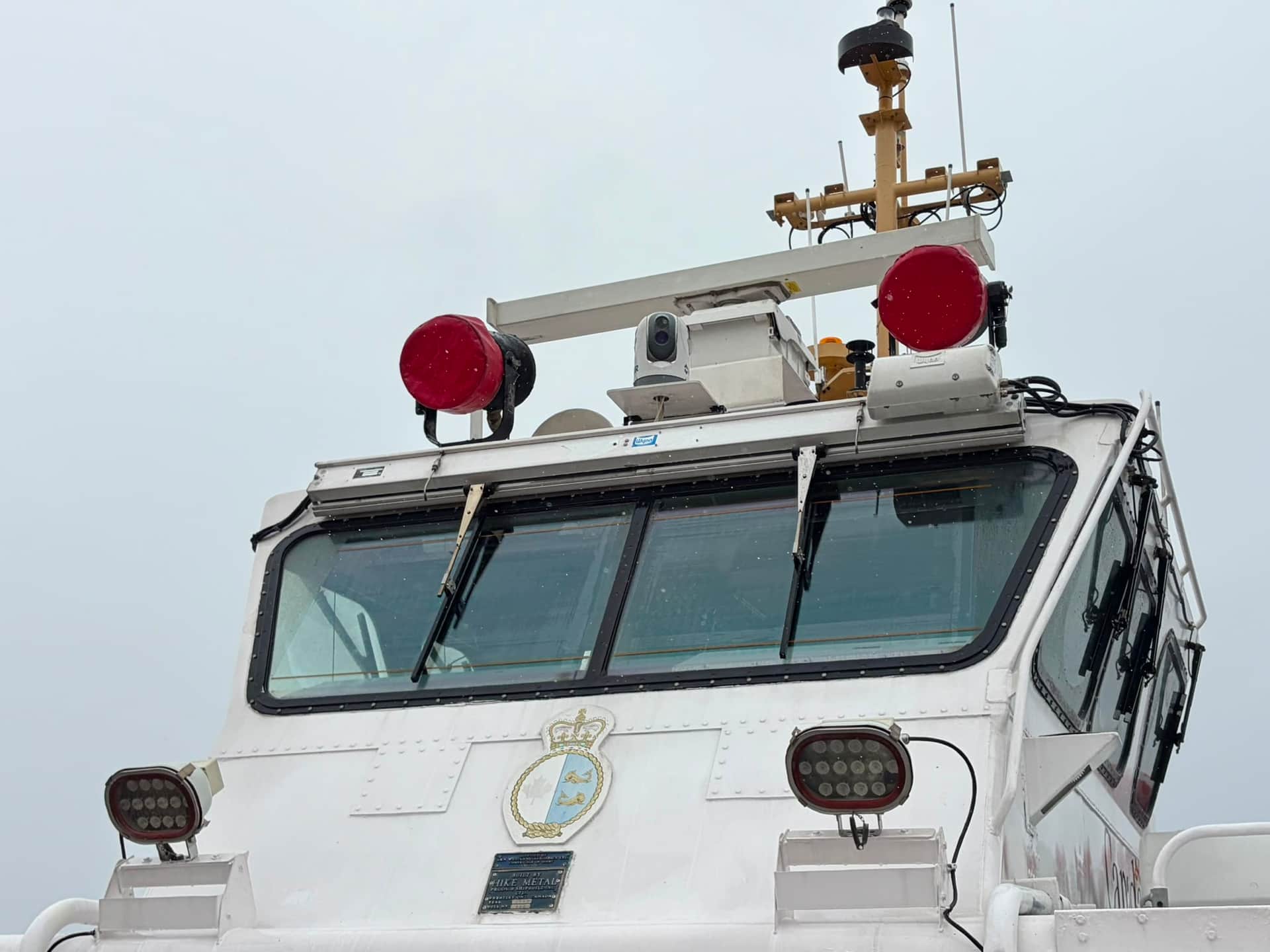
Since 2017, Ally has partnered with Vancouver Airport Authority (YVR) to design and deliver annual tabletop and full-scale exercises that support regulatory requirements and strengthen the airport’s emergency preparedness.
Developing realistic exercises often requires planners to gain firsthand knowledge of the agencies and resources that will be involved in the response.
A Hovercraft Rescue for YVR
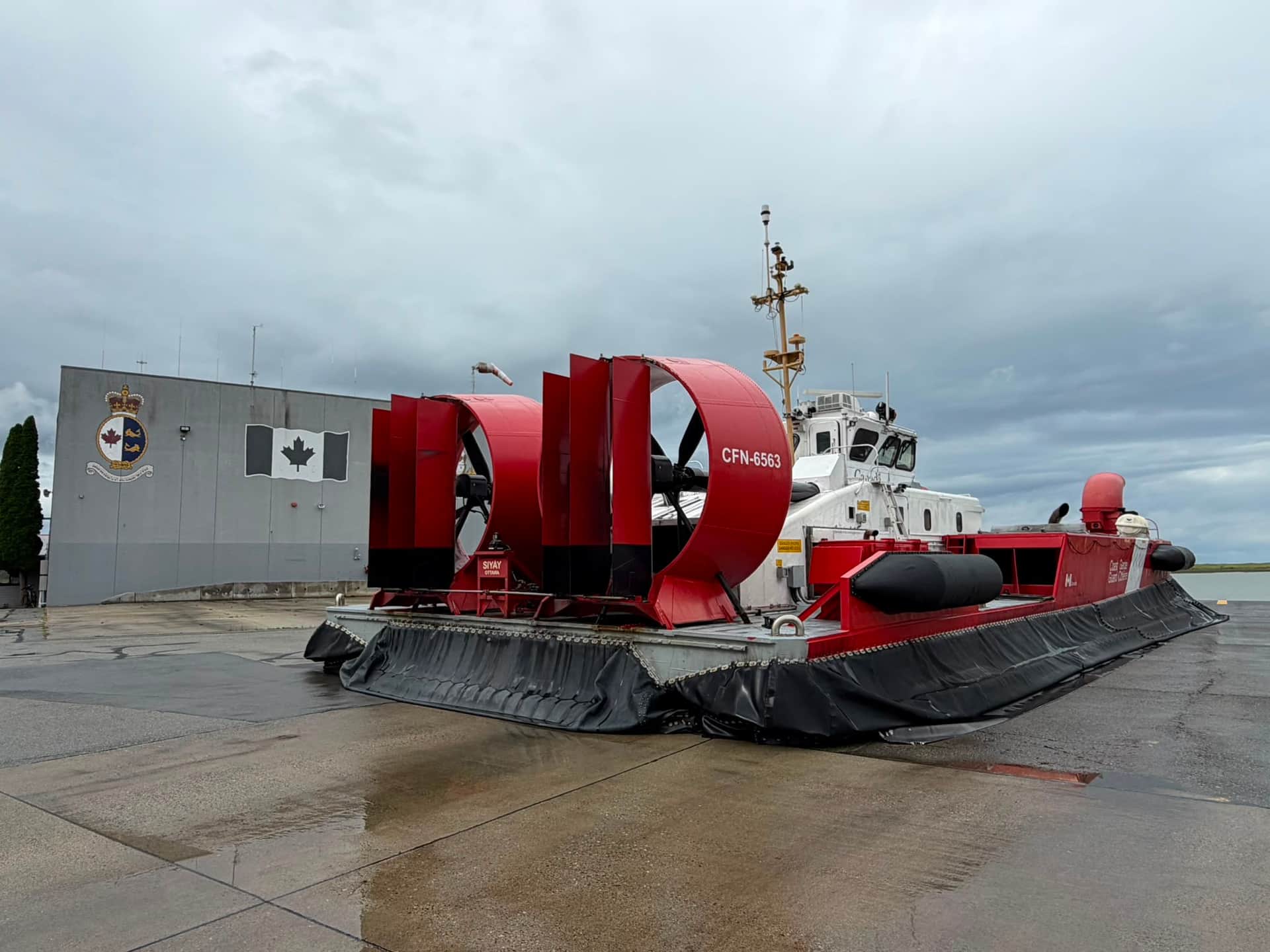
The focus of this year’s full-scale exercise (FSX) – scheduled for September 2026 – is a simulated crash involving a wide-body aircraft. In the planned scenario, the aircraft will come to a halt short of the airport boundary, approximately 200 metres offshore in a muddy tidal area. This scenario detail makes the aircraft inaccessible to YVR Fire and Rescue Services, who would normally be the lead responding agency to a crash at the airport. Instead, the initial rescue response in the exercise will be led by the Canadian Coast Guard (CCG), using a hovercraft operated out of the Coast Guard’s Sea Island Base in Richmond, BC.
Hovercraft hover above surfaces (water, land, and ice) on a cushion of air, offering the unique ability to navigate shallow waters and mudflats that are inaccessible to regular ships or vehicles. This aids in search and rescue and icebreaking activities, in addition to shallow water navigation.
Accurately Reflecting CCG in YVR's Exercise
In recognition of this unique response situation, the CCG invited the YVR and Ally planning team – along with other exercise stakeholders – for a familiarization of the hovercraft and the Coast Guard base. Among those attending was John Perry, Ally's lead planner for the September full-scale exercise, whose role is to ensure the exercise reflects the capabilities and procedures of participating agencies. The objective of the planning session with CCG was to better understand the Coast Guard’s role, capabilities, and operational considerations so they could be accurately included in YVR’s emergency exercise design.
In addition to YVR and Ally, the session was attended by representatives from YVR Fire & Rescue, Richmond Fire-Rescue, BC Emergency Health Services, and the Canada Border Services Agency.
Boarding the Hovercraft
The day began with an overview of Coast Guard operations, including how incidents are coordinated through the Joint Rescue Coordination Centre in Victoria and how a rescue response is initiated. Participants also heard from one of the Coast Guard’s rescue divers about the unique challenges of conducting search and rescue operations in the Fraser River, where poor underwater visibility creates very different operating conditions than open water.
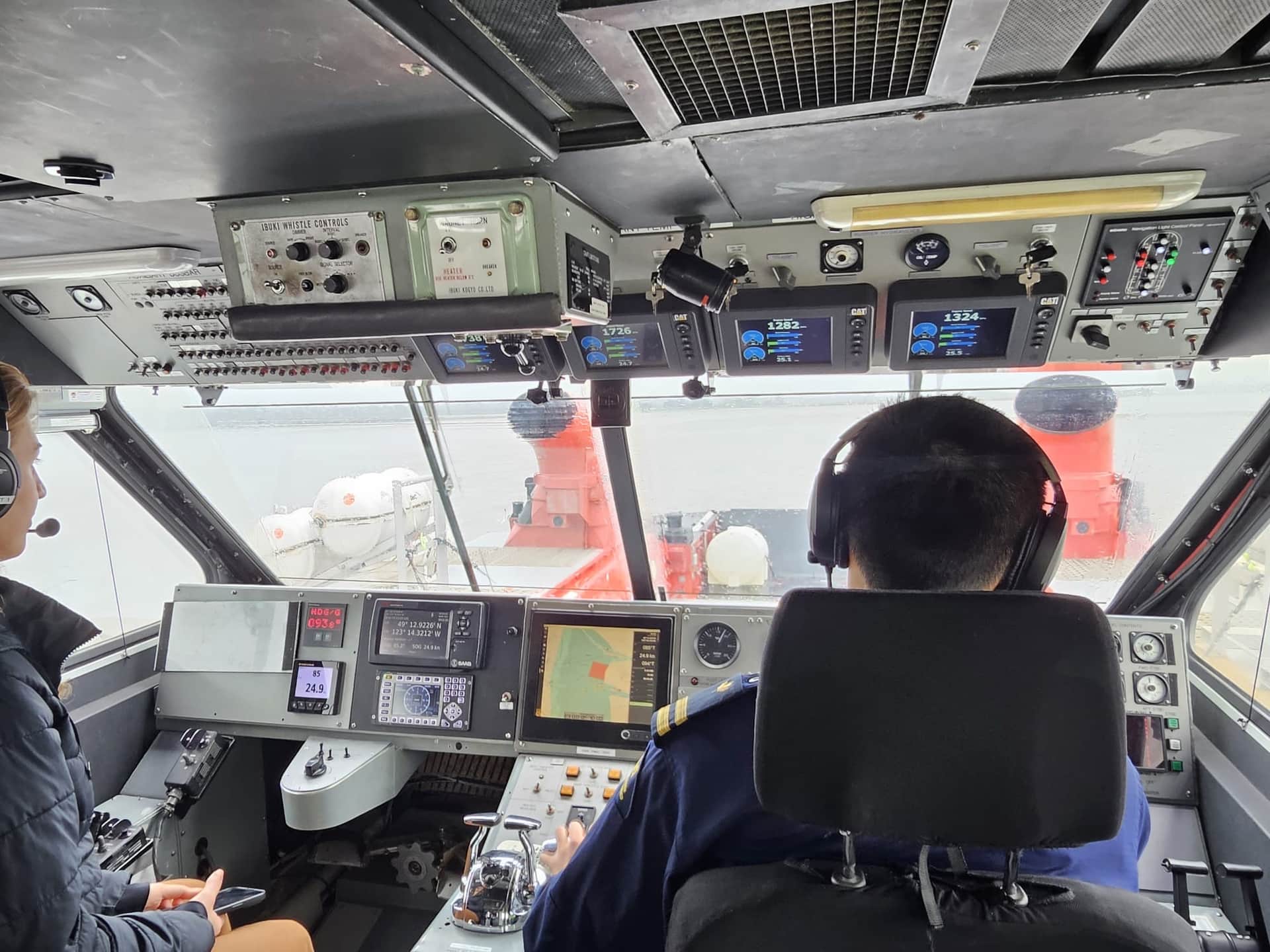
Participants also toured the Coast Guard hovercraft, which will play a central role in the exercise. Following a safety briefing, the group travelled aboard the hovercraft from the Coast Guard base to Iona Beach – the proposed notional location of the plane crash in YVR’s emergency exercise.
“The Coast Guard hovercraft would actually be the de facto incident command post for any other vessels coming in to assist with the rescue efforts.” – John Perry, lead planner, Ally Emergency Management
The trip provided an opportunity to better understand the hovercraft’s capabilities, travel times, and operational limitations. Tidal conditions are an important consideration when determining whether to utilize a hovercraft for search and rescue. For the YVR exercise, the scenario design will reflect conditions that would preclude conventional rescue boats from reaching the aircraft because of insufficient draft. Similarly, land-based emergency vehicles would not be able to access the muddy shoreline. These scenario conditions result in the CCG hovercraft becoming the primary means of transporting casualties from the incident site. As Perry observed, “the Coast Guard hovercraft would actually be the de facto incident command post for any other vessels coming in to assist with the rescue efforts.”
Decontamination Planning
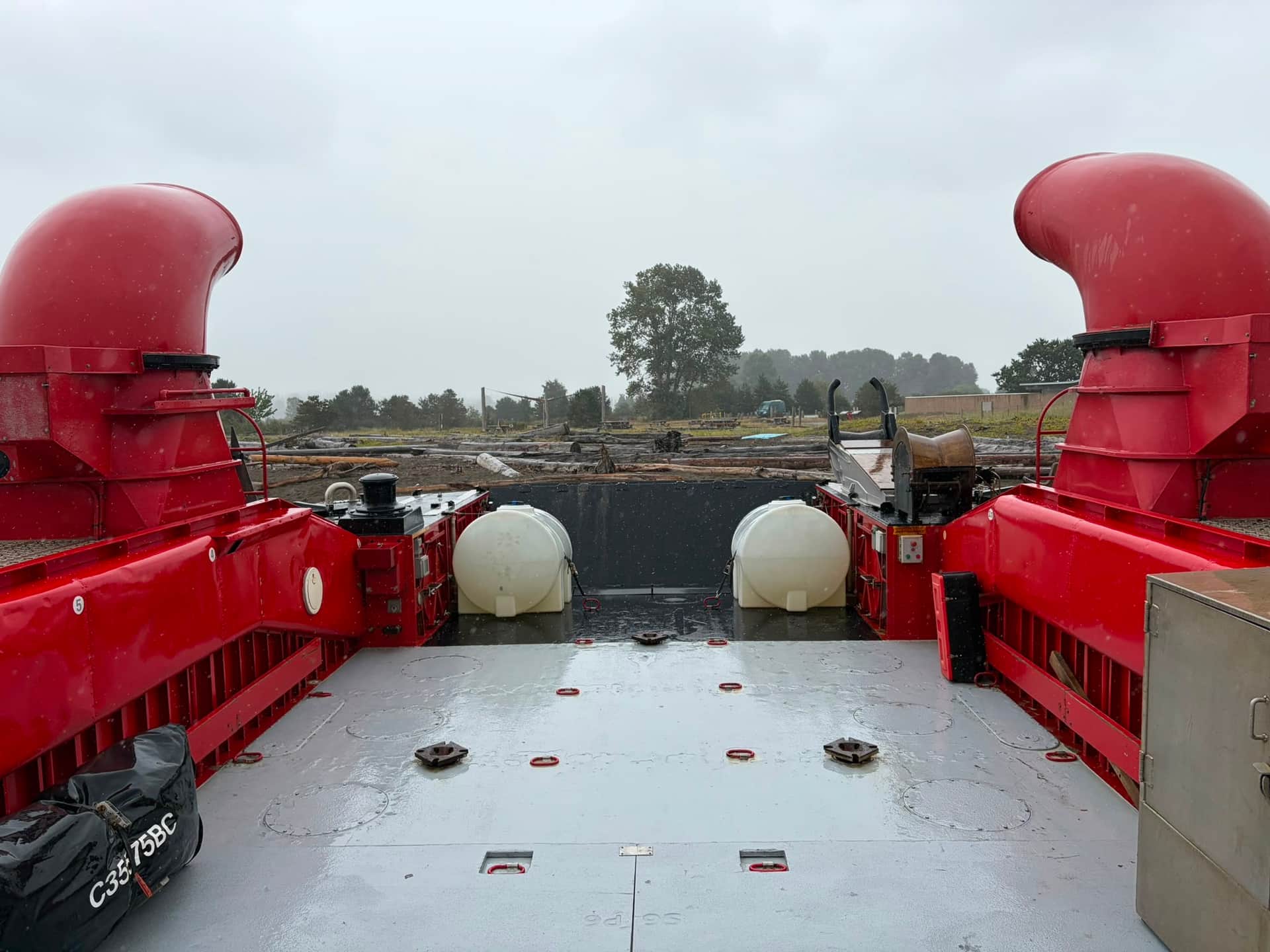
Following the hovercraft site visit, the group worked through how the response would function once casualties arrived back at the Coast Guard base. Discussions focused on how the hovercraft would be configured to transport passengers, including those who had been contaminated by hazardous substances during the crash landing. The bridge of the vessel would remain a protected “cold zone,” while the exterior deck would operate as a “hot zone,” allowing Coast Guard personnel to continue multiple rescue trips before undergoing decontamination themselves. Hot and Cold zones refer to areas during hazardous material emergencies to prevent the spread of contamination.
The group also examined how the Coast Guard property could be used during the exercise, including locations for casualty collection, medical triage, responder staging, and controlled site access. Working through these details together helped clarify how patients, responders, and equipment would move through the site during the simulated response.
Time Well Spent in Advance of the FSX
Although the exercise itself will take place in September, much of its success depends on the planning that happens beforehand. Site visits like this allow exercise planners to validate assumptions, better understand the capabilities of participating agencies, and identify operational issues before they become exercise-day challenges.
“I have now in my mind exactly how the site component of this exercise is going to work.” – John Perry, lead planner, Ally Emergency Management
Learn More About Ally's Work with YVR
Ally has proudly supported YVR’s emergency management program for several years, working alongside airport emergency planners to design and facilitate both tabletop and full-scale exercises. This included a Full-Scale Emergency Exercise focused on FIFA preparedness in the fall of 2025. These exercises play an important role in strengthening coordination, validating emergency plans, and ensuring agencies are prepared to respond effectively during real-world incidents.
To learn more about how Ally supports clients in the transportation sector, including YVR and Rocky Mountaineer, visit our portfolio pages for individual case studies of emergency exercises we have designed and executed for clients.