When the Runway Isn’t the Landing Site: YVR’s 2026 Full-Scale Emergency Exercise
What happens when an inbound aircraft emergency occurs at an airport, but the plane doesn’t make it to the runway? That was the scenario at the centre of Vancouver International Airport’s (YVR) annual full-scale emergency exercise held last month.
What happens when an inbound aircraft emergency occurs at an airport, but the plane doesn’t make it to the runway?
That was the scenario at the centre of Vancouver International Airport’s (YVR) annual full-scale emergency exercise held earlier this month. For the fifth consecutive year, Ally supported the design, coordination and execution of the exercise, aimed at testing YVR’s emergency plan in response to a major aircraft incident.
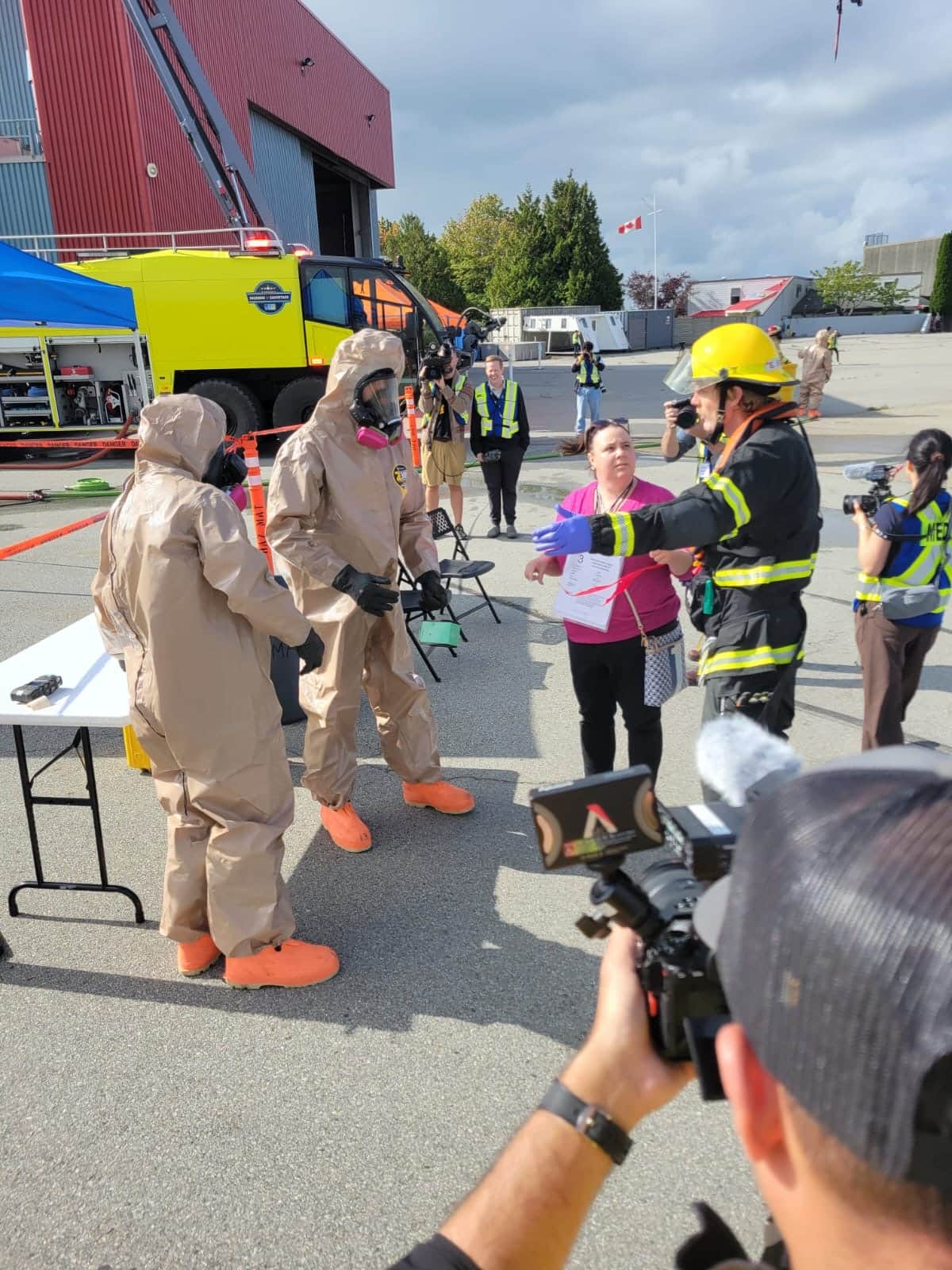
The simulated scenario involved an international flight approaching YVR declaring a low-fuel emergency and subsequently landing 400 metres short of the runway in the surrounding mudflats. Because of the aircraft’s simulated crash location, YVR Fire and Rescue could not access it using conventional emergency response vehicles. The exercise therefore required coordination with the Canadian Coast Guard, whose hovercraft provided access to the notional aircraft and transported passengers away from the crash site.
Part of a Broader Emergency Management Program
Hosting full-scale exercises is a key component of YVR’s Emergency Management Program and is required by Transport Canada. YVR’s annual full-scale exercise alternates between aircraft incident and security-related scenarios, providing an opportunity to regularly test procedures, strengthen coordination, and enhance preparedness to help ensure the airport community is ready to respond to any situation at YVR safely and effectively.
Ally has supported YVR’s annual exercise program for the past five years, working alongside the Emergency Management and Business Resilience team to design, coordinate and execute realistic, multi-agency exercises.
From scenario development and exercise coordination to on-the-ground exercise support, Ally helps organizations turn emergency plans into practical experience. Our approach is focused on creating realistic opportunities to practise roles, strengthen relationships and identify practical improvements before an emergency occurs
From the Crash Site to the Airport
This year's emergency scenario was designed to engage a wide range of response organizations and supporting agencies both at the incident site and at the airport.
At the incident site, the Canadian Coast Guard, YVR Fire and Rescue, RCMP, and BC Emergency Health Services coordinated activities to transfer simulated victims from the notional crash site to the Coast Guard Base, where medical triage would take place. The international flight component necessitated the involvement of Canada Border Services Agency (CBSA), while the RCMP supported the broader response.

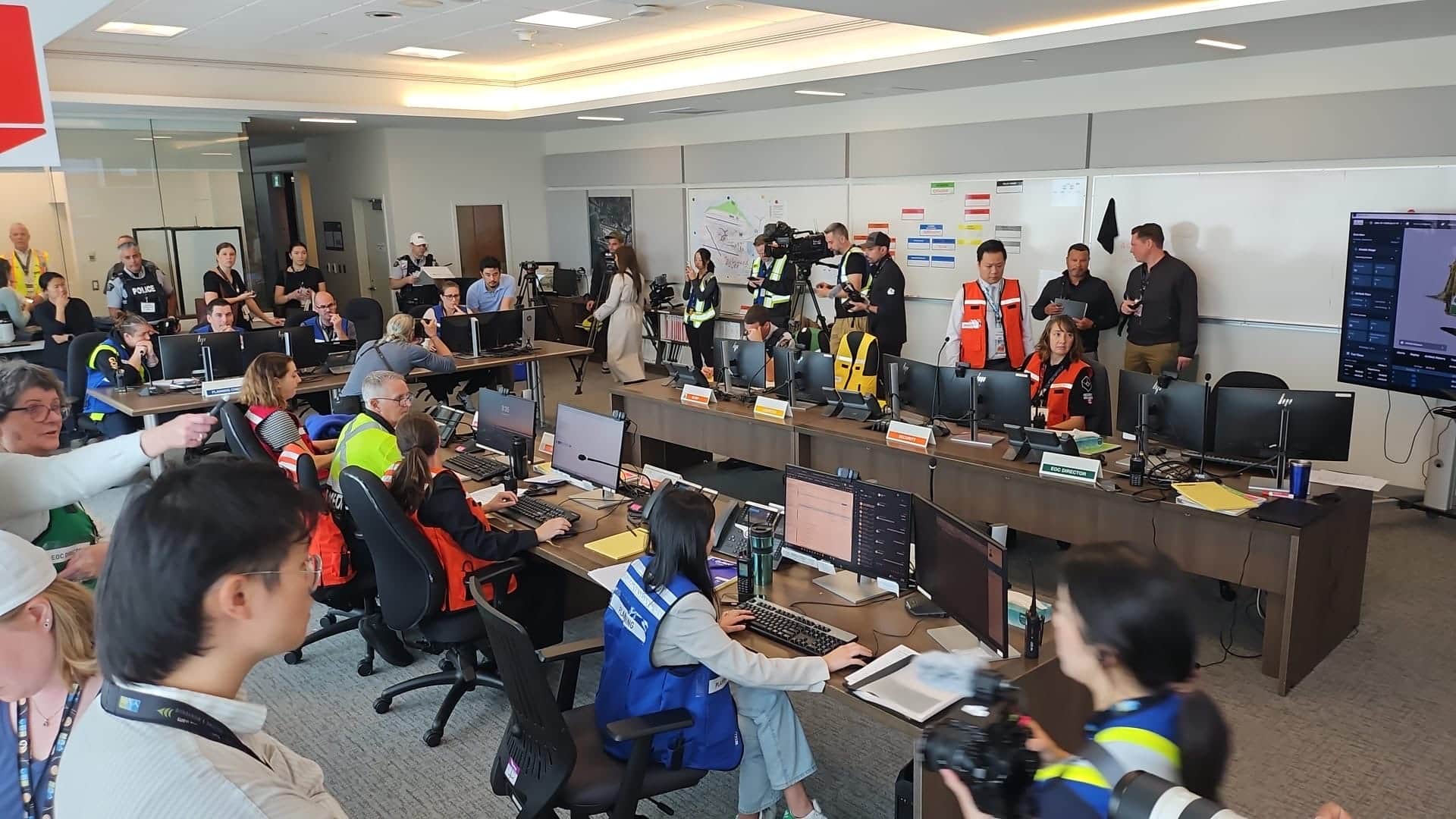
The scenario was also designed to extend well beyond the initial rescue actions at the crash site. At the airport, YVR’s Emergency Operations Centre (EOC), the Communications Operations Centre (COC), Guest Services, airlines, passenger processing, and family and friend reception functions were all engaged. Information needed to flow between the EOC, the COC, the incident site, and the wider airport community to keep staff and guests informed throughout the exercise. That is one of the key benefits of a full-scale exercise: putting people, plans, equipment and relationships into practice in a controlled environment, so organizations can identify opportunities to strengthen coordination and response before they are needed in a real emergency.

Bringing the Response to Life
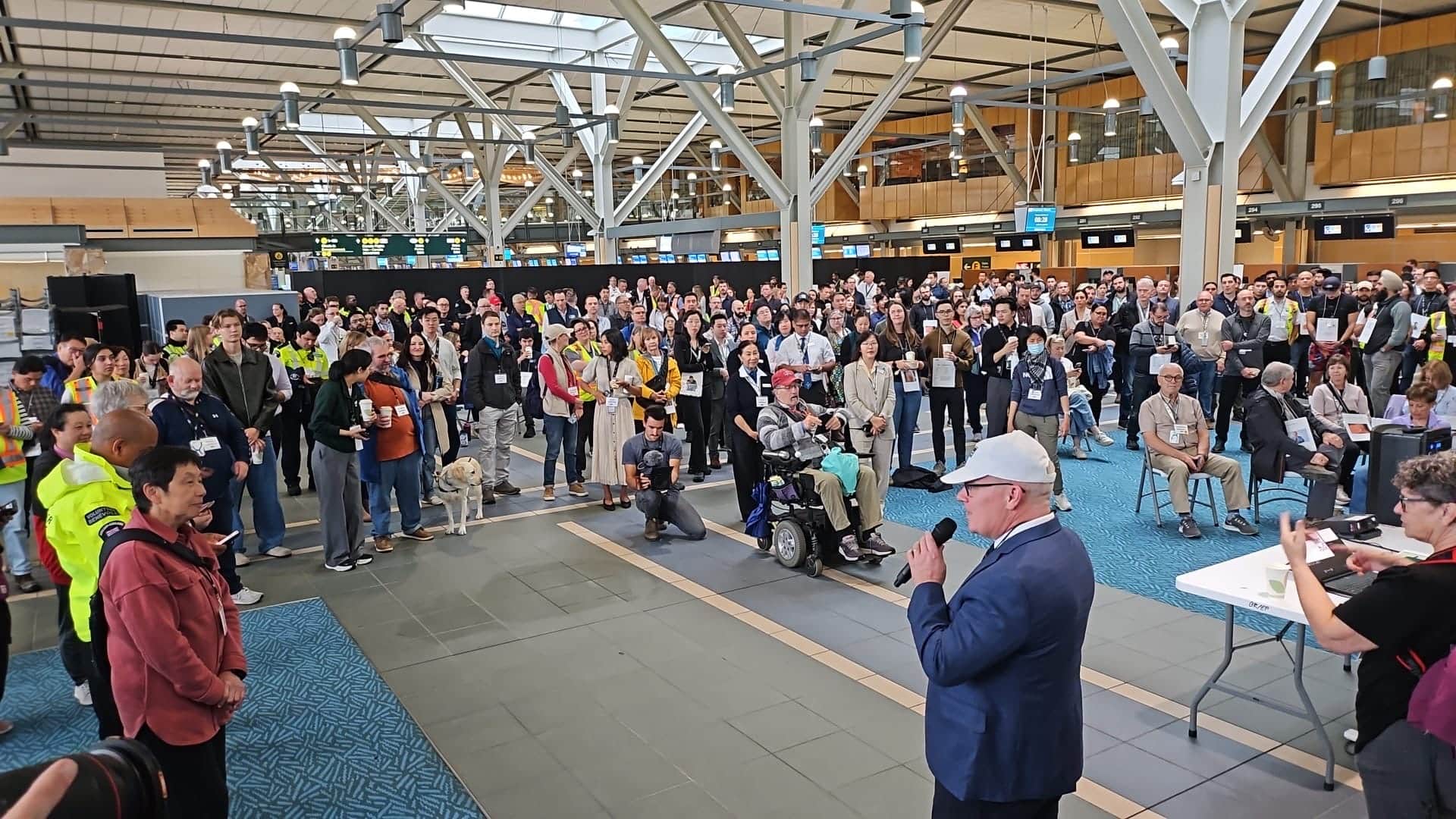
A unique component of this year’s exercise was the involvement of more than 150 volunteers who simulated passengers across various exercise nodes, from the notional crash site to the Coast Guard base and at YVR’s passenger processing area.
For those at the notional incident site, each volunteer was assigned a specific injury or condition and provided with a lanyard containing photographs and a description of the injury. Volunteers were asked to simulate minor injuries and the stress and confusion that could accompany the experience. Responders used this information during simulated triage to assess and prioritize passengers.
Using real people as simulated crash victims added a significant layer of realism to the exercise. Responders had to communicate directly with passengers, assess their needs, move people safely and coordinate their transition between different parts of the response. The exercise also introduced the practical logistics of moving large numbers of people – from the simulated crash site to the CCG base and, depending on their simulated needs, onward to the airport or hospital.
At YVR, uninjured international passengers moved through the airport’s arrival facility, including clearing customs with the Canada Border Services Agency, before continuing through to the simulated reunification process in the Friends and Family Reception Centre.
The use of 150 volunteers to simulate passengers represented a scale beyond anything previously undertaken in a YVR full-scale exercise. It allowed exercise participants to experience the human and logistical complexity of managing a large number of passengers across multiple locations – not simply as a scenario to discuss, but as people who needed to be assessed, communicated with, transported and accounted for.
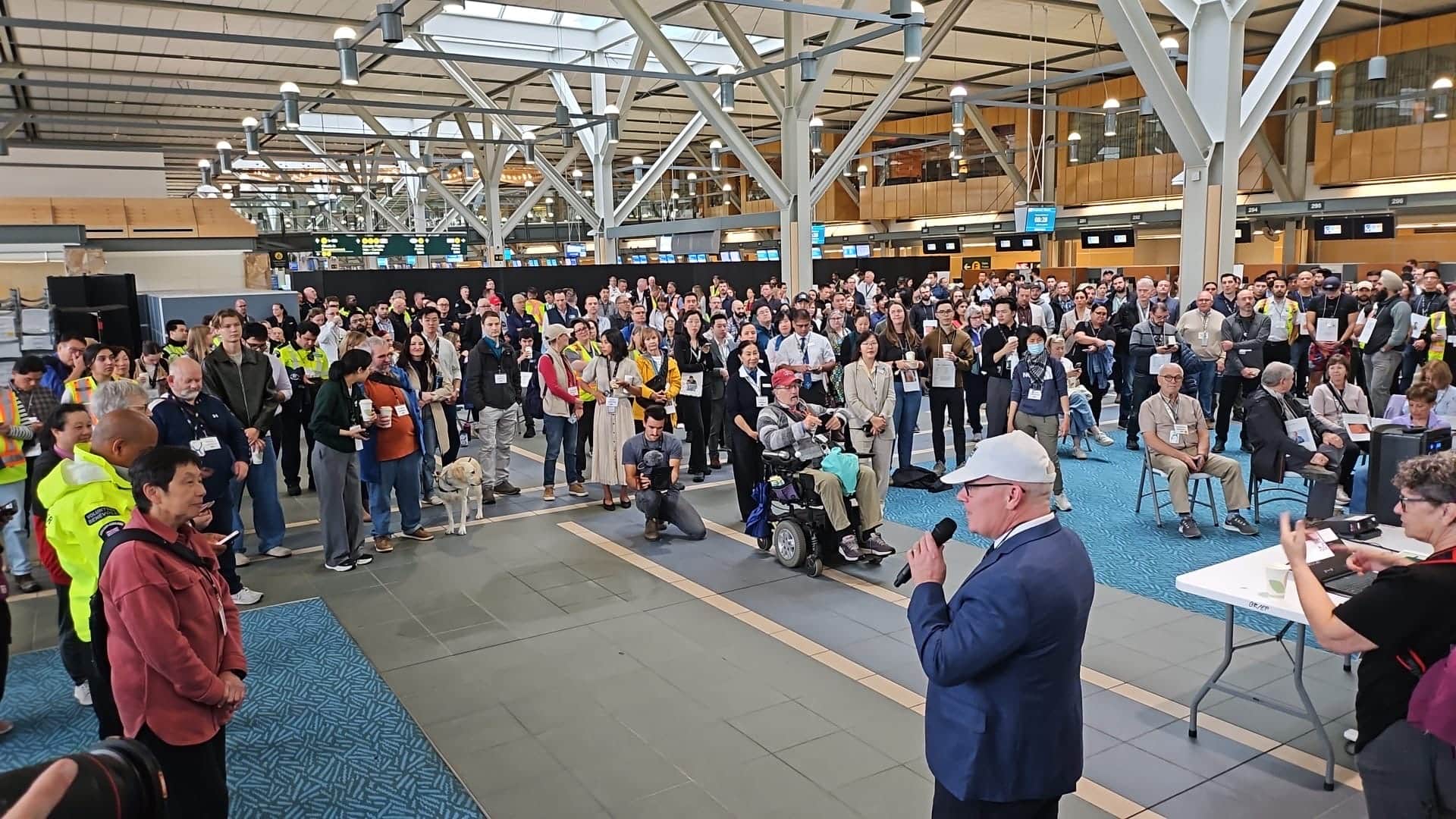
Exercise Media Coverage
YVR hosted a media tour during the exercise, providing journalists with an opportunity to observe the simulated response and learn more about the airport’s emergency preparedness program. Coverage included CBC Vancouver, Global Vancouver, CityNews Vancouver, and CTV News Vancouver.
Learn More About Ally's Work in the Transportation Sector
Ally has proudly supported YVR’s emergency management program for several years, working alongside airport emergency planners to design and facilitate both tabletop and full-scale exercises. This included a Full-Scale Emergency Exercise focused on FIFA preparedness in the fall of 2025. To learn more about how Ally supports clients in the transportation sector, including YVR and Rocky Mountaineer, visit our portfolio pages for individual case studies of emergency exercises we have designed and executed for clients.