Among the many habits that define a strong emergency management practitioner, two often get overlooked because they seem too obvious: reading the manual and taking notes. In the rush and excitement of an EOC activation, it’s tempting to skip the basics – until those basics become problems of their own. In this issue of EOC Bootcamp, our CIO – Dave Whittier – shares two simple but powerful reminders: ‘If You Don’t Write it Down, It Never Happened’ and ‘Read the F&%^ Manual!’. These habits are crucial for achieving greater EOC Success.
Read the F&%^ Manual!
Confession: the first time I saw the acronym ‘RTFM,’ I had to Google it. I usually pride myself on acronyms, but this one threw me completely. It’s usually used when someone posts a simple question online that could be answered by a quick look at the manual. The implication: the asker was too lazy to check for themselves.
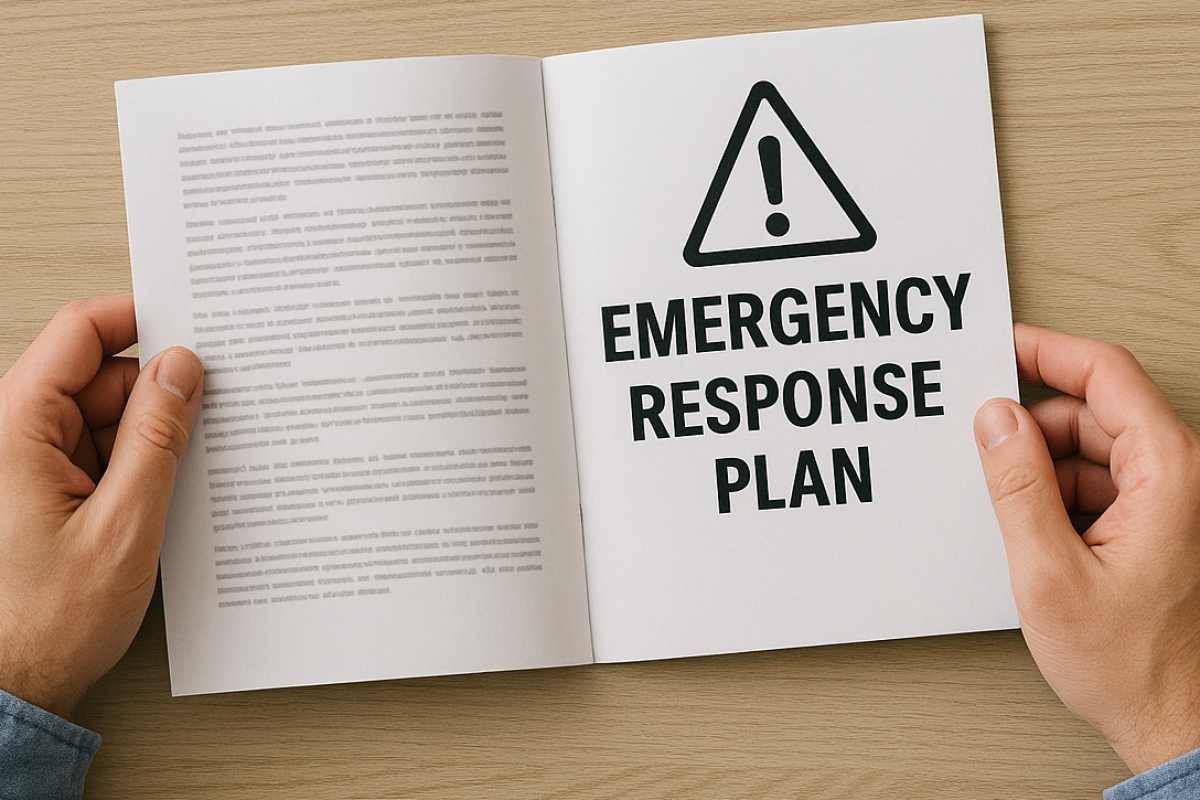
It’s also good advice in emergency management, though for different reasons. Here, it means that before jumping into an EOC activation or exercise, take a few minutes to re-familiarize yourself with the Emergency Response Plan and your specific role.
The issue is excitement: people arrive at the EOC, phones are ringing, conversations buzzing, and they want to dive in immediately. A good attitude, and I applaud it. But it may have been months since their last activation—and memory fades, processes change.
Emergency Response Plans exist for a reason: they’ve been carefully designed to guide actions and coordination. Many EOCs have plasticized cards detailing the roles and responsibilities of each position, so that there are no gaps or overlaps in who does what. The 10–15 minutes spent refreshing your memory will pay off once things get hectic.
Better yet, review the plans regularly—before an emergency. You never know when that knowledge will prove invaluable. Preparation sets the stage. But once the response is underway, the real challenge is making sure information isn’t lost—through disciplined note-taking.
Preparation sets the stage. But once the response is underway, the real challenge is making sure information isn’t lost—through disciplined note-taking
If You Don’t Write It Down, It Never Happened!
It’s Day 2 of an activation. You’ve signed in, grabbed coffee, and head to the Ops desk to meet your counterpart for handover.
To achieve EOC Success, it is vital to implement effective communication strategies and ensure every team member understands their role in the overall plan. Additionally, keeping thorough logs contributes significantly to EOC Success.
The Ops desk is a mess: slips of paper scattered everywhere, some stapled together and covered in indecipherable scribbles. The duty log has a single entry from eight hours ago: ‘John Smith on duty.’ John stands nearby, sheepish and defensive. You sigh and try to piece together what’s been happening.
If this sounds familiar, you already know the value of good logs. If not, consider yourself lucky—and let’s keep it that way.
As a desk officer, effective log keeping is one of your most important skills. Tracking what’s happened, what needs doing, and what’s been completed ensures continuity across shifts and prevents critical information from being lost.
Here are a few tips to keep your logs useful—and your replacements grateful:
- Most EOCs and Emergency Response organizations have duty log formats. Use them.
- Number your entries. That way you don’t have to write down a summary of a situation each time there’s an update, or risk your replacement not knowing the context in which you’ve written an entry. It’s the difference between “for that situation three hours ago where the fire department was looking for the police to put extra road blocks on Main St, the roadblocks have been delayed”, and “see #218; roadblocks are delayed”.
- Never jot notes on scraps or in personal notebooks—put everything in the log. It doesn’t have to be pretty, just legible.
- Paper is cheap. Don’t try to force everything into one line, use as much space as you need to be complete and understandable.
- Number your pages! Put the operation name, the duty station and your name on each page. Write down the time you make each entry.
- Your log should have a column for you to describe the situation, and a column to describe what action you took and/or who you informed. Remember: who needs to know what I know?
- Come up with a system that you can use to mark critical incidents you will need to brief your replacement on. Also, you need to annotate the entries that need you to actually complete a task and a way to mark when your task is complete.
- At the end of your shift, use your cunningly annotated log to drive your handover briefing with your replacement. At the end of the activation, collect up all your log sheets and pass them over to the Records unit in Plans for archiving. They become part of the official record of your organization’s response.
Good logs prevent as many miscommunications and mistakes as any other EOC procedure. Make sure you get them right. Ultimately, effective documentation is a key element in ensuring EOC success, allowing for clear communication and seamless transitions between shifts.
This post was originally written and posted on Dave Whittier’s LinkedIn profile.