In emergency operations, decisions often have to be made before all the facts are in. That’s where situational awareness comes in — the ability to recognize what’s happening, understand its implications, and anticipate what might happen next.
It’s a phrase you’ll hear often in Emergency Operations Centres (EOCs), but also one that’s often misunderstood. At its core, situational awareness isn’t just about collecting information — it’s about making sense of it. And in a high-pressure environment, that can make all the difference between a coordinated response and a confused one.
What Do We Mean by “Situational Awareness”?
Many industries have their own language, but few embrace jargon quite like the military. One term that has made its way from the armed forces into emergency management circles is “situational awareness.” It’s become so common that “FYI” (For Your Information) has evolved into “FYSA” — For Your Situational Awareness.
Public Safety Canada offers a great definition in their Federal Emergency Response Plan:
“(Situational Awareness is) the continual process of collecting, analyzing, and disseminating intelligence, information, and knowledge…to allow organizations and individuals to anticipate requirements and to respond effectively.”
And the U.S. Coast Guard puts it even more plainly:
“Situational awareness is the ability to identify, process, and comprehend the critical elements of information about what is happening to the team with regards to the mission. More simply, it’s knowing what is going on around you.”
Why It Matters in the EOC?
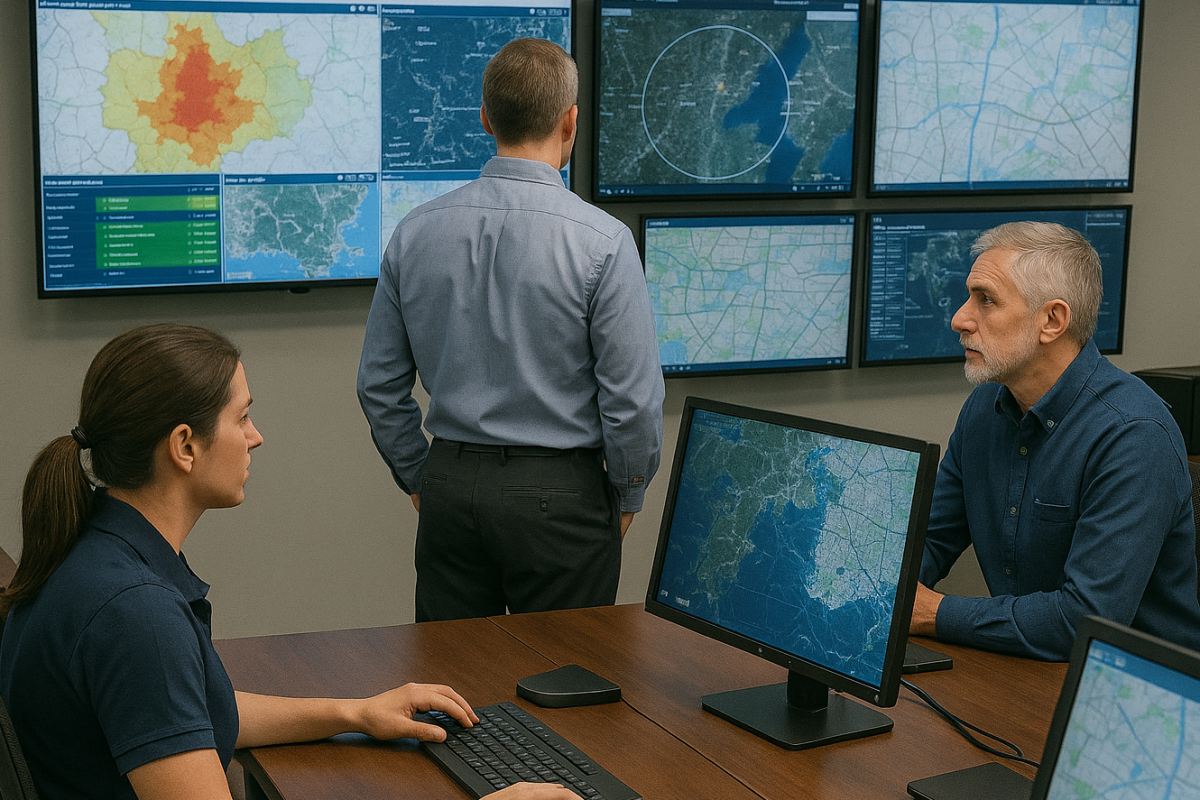
In the context of emergency management, situational awareness isn’t just about producing more reports or filling in the status boards — it’s about how well the team interprets and acts on the information those tools provide. The maps, boards, and tracking systems are vital, but they only create value when they’re paired with communication, analysis, and sound decision-making.
When we say “FYI,” we’re passing along information. When we say “FYSA,” we’re saying, “Here’s something that should change how you see or act on the situation.” That’s a subtle but powerful difference.
Complete situational awareness is rarely achievable — emergencies are dynamic by nature — but building and maintaining it is essential. In the EOC, strong situational awareness helps decision-makers:
Understand what’s truly happening.
Anticipate what might happen next.
Allocate resources effectively.
Restore the community or organization to a steady state faster.
When we say “FYI,” we’re passing along information. When we say “FYSA,” we’re saying, “Here’s something that should change how you see or act on the situation.” That’s a subtle but powerful difference.
How to Build Better Situational Awareness
While it may sound abstract, situational awareness can be strengthened through deliberate practice and structure. Teams can:
Reinforce information flow: Work within the established Incident Command System (ICS) framework for information sharing — ensuring updates move efficiently through the chain of command (for example, between the Incident Commander, Operations, and Planning sections) and are captured accurately in situation reports and briefings.
Use common language: Avoid jargon that obscures meaning; focus on clarity and shared understanding.
Visualize the situation: Use situation boards or maps to give everyone a shared picture of reality.
Encourage open communication: Invite questions and challenges when something doesn’t make sense.
Practice it: Exercises and after-action reviews are opportunities to build these habits before the real event.
Our Take at Ally Emergency Management
At Ally, we see situational awareness as the foundation of effective emergency response. It’s not about having perfect information — it’s about creating a shared understanding that enables confident, coordinated action.
Our EOC training and exercises are designed to help teams practice these skills under realistic conditions, so when a real emergency happens, they already know how to make sense of a changing situation together.
If your organization wants to strengthen its decision-making and coordination in the EOC, we’d be happy to help you build the awareness — and the confidence — to manage whatever comes next.
This article was originally written and posted on Dave Whittier’s LinkedIn. It has since been revised and expanded by additional contributors, and incorporates editorial input generated through ChatGPT.